Scan. Quack. Track: Giving Cruise Ducks a Story
We gave 14 cruise ducks their own QR codes, a worldwide map and a story that could keep travelling long after our holiday ended.

We took 14 rubber ducks on holiday. Obviously, they needed a website.
Cruise ducks are a wonderfully simple tradition: hide a duck onboard, let another passenger find it, then send it off on its next adventure. On our family cruise to the Norwegian Fjords, we wondered if we could add a little digital fun without spoiling the charmingly low-tech idea.
So we built Cruise Duck Qu-acker.
Each duck carried a unique QR code. Finders could scan it, give the duck a name, add the town or city it had reached, and say whether they were keeping it or hiding it again. Every new stop would appear on a worldwide map, giving each small plastic traveller a story of its own.
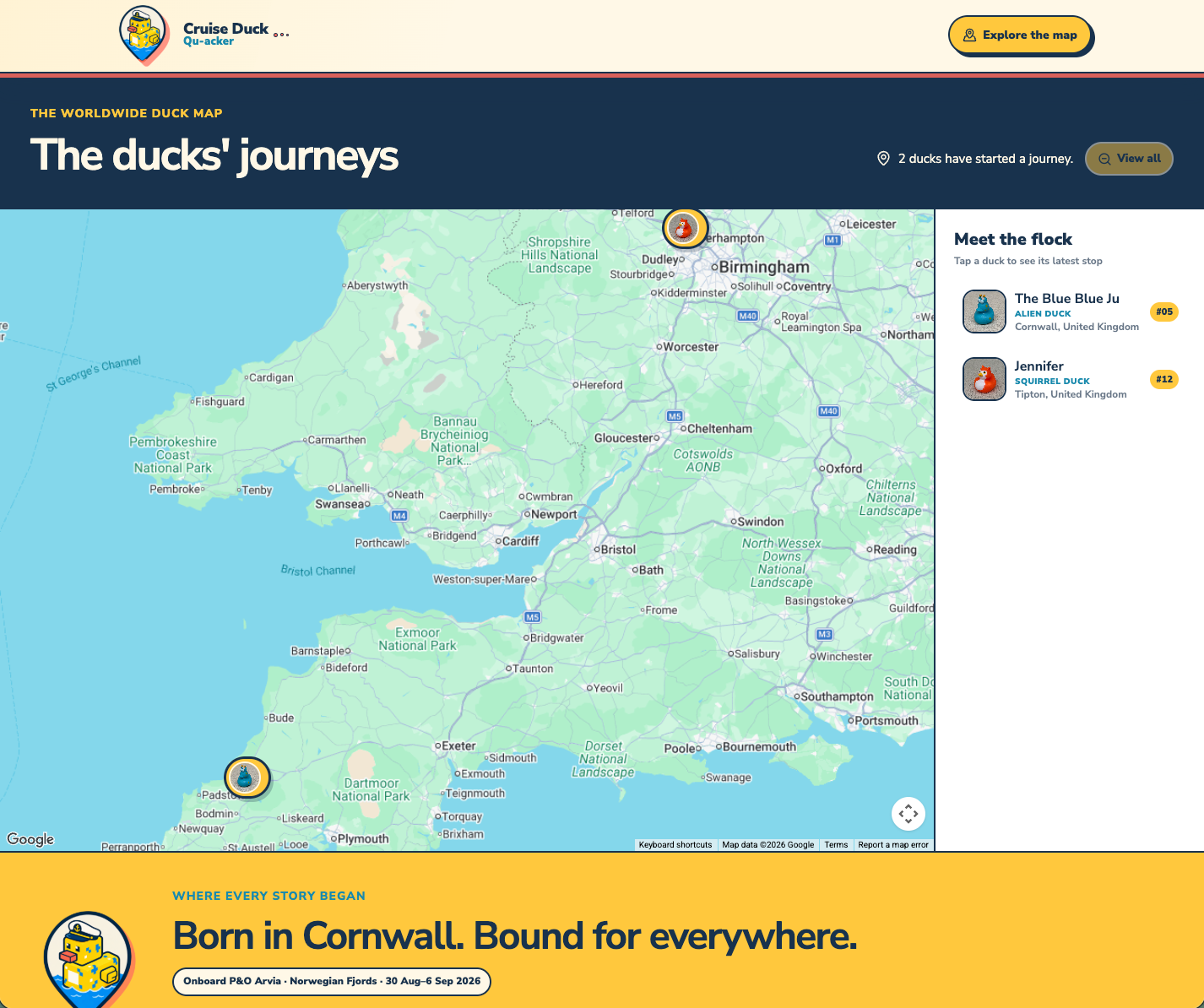
We kept the experience deliberately quick and privacy-conscious. There are no accounts, no GPS tracking and no requests for names or exact locations. Just a duck, a town or city, and the option to keep the adventure moving.
The other experiment was behind the scenes. A proof of concept like this might once have taken us two weeks. This one came together in a couple of days, leaving more time for the characters, the wording, the map and whether the whole thing feels fun to use.
It was a family holiday project, not a grand digital transformation. That was rather the point. Small ideas are excellent places to test what is now possible.
At the time of writing, three ducks have begun their journeys. We’ll be watching the map to see where the rest of the flock lands.
Born in Cornwall. Bound for everywhere.